TL;DR:
- A mortgage valuation lower than your agreed price is often called a “down valuation”, and it can affect your deposit, your mortgage amount and your moving timeline.
- A low valuation doesn’t automatically mean the property is overpriced, lenders use their own criteria, surveyors and comparable sales data.
- Buyers generally have five options: renegotiate the price, increase the deposit, challenge the valuation, try another lender, or walk away.
- Sellers can reduce the risk of a down valuation by pricing realistically and using recent, genuinely comparable local sales.
- Outcomes depend on your lender, mortgage product and personal circumstances, there’s no single “right” answer.
- Local knowledge matters: valuations can vary between Lancashire towns such as Preston, Chorley, Burnley and Blackburn.
What Does a Mortgage Valuation Mean?
A mortgage valuation is an assessment carried out on behalf of your lender to check that the property is worth roughly what you’ve agreed to pay for it. The lender arranges this, usually via a surveyor, once your mortgage application is underway.
It’s worth being clear about what a mortgage valuation is not. It isn’t a full structural survey, and it isn’t the same as a marketing valuation carried out by an estate agent, or the guide price sometimes shown on a listing. An agent’s valuation is about attracting buyers and setting a realistic asking figure. A mortgage valuation exists purely to protect the lender, it confirms the property is adequate security for the loan they’re providing.
What Happens If the Mortgage Valuation Is Lower Than the Offer?
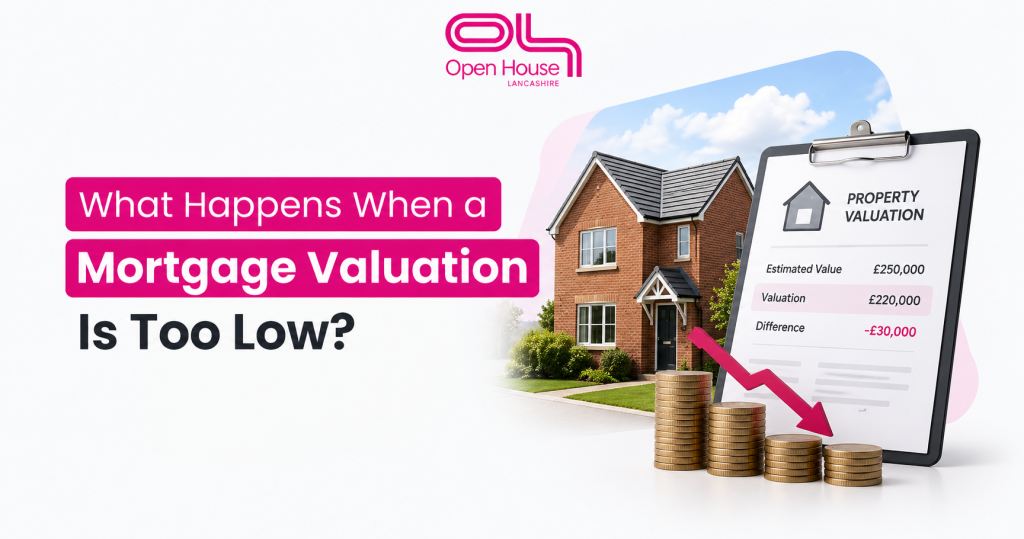
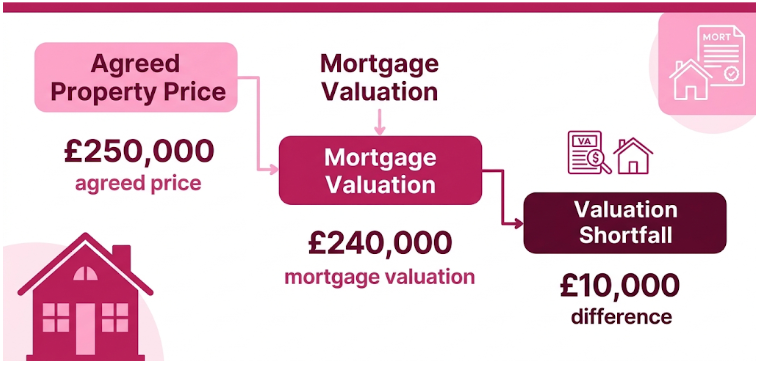
Let’s use a simple example. Say a buyer agrees to purchase a property for £250,000, but when the lender’s valuation comes back, it values the property at £240,000. That’s a £10,000 shortfall between the agreed price and the lender’s figure.
This kind of gap can affect several parts of the transaction:
- The buyer: They may need to find additional funds, renegotiate the purchase price, or reconsider the purchase.
- The seller: They may be asked to reduce the asking price, or the sale could be at risk of falling through.
- The mortgage: The lender may base the mortgage amount on the lower of the purchase price or the property’s valuation.
- The deposit: Because the loan-to-value (LTV) ratio is based on the lower valuation, the buyer may need to contribute more of their own money to cover the difference.
- The agreed price: The buyer and seller may need to renegotiate the price, or the buyer may choose to cover the shortfall themselves.
Exactly what happens next depends on the lender, the specific mortgage product, and the buyer’s own financial circumstances, so it’s always worth speaking to your broker or lender directly about your situation.
Why Might a Mortgage Valuation Be Lower Than the Asking Price?
1. The Property Is Overpriced
Sometimes the asking price simply doesn’t reflect what similar properties in the area are actually selling for. This can happen when a seller’s expectations run ahead of the local market.
2. Recent Comparable Sales Suggest a Lower Value
Surveyors lean heavily on recent sold prices for similar homes nearby. If comparable sales have come in lower than expected, the valuation is likely to reflect that.
3. The Market Has Changed
Property markets move. If conditions have softened since the price was agreed, or since the property was first listed, that shift can show up in the valuation.
4. The Property Needs Significant Work
Issues such as damp, an ageing roof, outdated electrics or an unmodernised kitchen and bathroom can all lead a surveyor to value a property more cautiously.
5. The Lender Uses a Different Valuation Method
Different lenders instruct different surveyors, and valuation approaches can vary between mortgage products. This is one reason a second opinion can sometimes produce a different figure, and it’s worth keeping an eye on how mortgage rates and lending criteria are moving, as both can influence how cautiously lenders approach valuations.
What Are Your Options If the Mortgage Valuation Is Too Low?
Renegotiate the Purchase Price
The most common outcome is that buyer and seller go back to the table and agree a revised price closer to the valuation figure. This keeps the sale moving without either side taking on extra risk, and it’s a normal part of buying a house in Lancashire.
Increase Your Deposit
Depending on their financial circumstances and their lender’s requirements, some buyers choose to cover the shortfall themselves by putting down a larger deposit. This isn’t possible for everyone, and it’s worth discussing affordability carefully with a mortgage adviser before committing.
Challenge the Valuation
Some lenders allow a valuation review or appeal, particularly if you can provide strong evidence of recent comparable sales. Requirements vary significantly between lenders, and a challenge isn’t guaranteed to succeed.
Find Another Mortgage Lender
Instructing a different lender may produce a different valuation, since surveyors and internal criteria vary. However, there’s no guarantee a second valuation will come back higher, and starting a new application takes time.
Walk Away From the Purchase
If the gap between the valuation and the agreed price is too large to bridge, or the property no longer feels like good value, walking away is sometimes the sensible choice. It’s an option worth keeping in mind rather than feeling locked in.
Mortgage Valuation vs Estate Agent Valuation
These two types of valuation serve very different purposes, and it helps to understand the distinction.
Mortgage Valuation
- Ordered by the lender, not the buyer or seller.
- Exists to protect the lender’s interests.
- Used strictly for mortgage lending purposes.
Estate Agent / Property Valuation
- Based on local market knowledge and recent sales.
- Helps determine a realistic asking price.
- Focused on attracting genuine buyer interest.
For Lancashire homeowners, getting an accurate property valuation from a local agent before you list is one of the best ways to reduce the risk of a mismatch further down the line.
What Does This Mean for Lancashire Buyers and Sellers?
Lancashire is a varied county, and property values can shift noticeably from one town to the next. According to our Lancashire property market coverage, demand and pricing pressure differ across areas such as Preston, Chorley, Burnley and Blackburn, which is part of why two similarly priced homes in different towns can attract very different valuations.
This is exactly why local comparable sales matter so much when a valuation is queried. A surveyor working to Preston-specific data, for example, may reach a different conclusion than one working from county-wide averages. Buying or selling in Lancashire, it’s worth leaning on agents who know the nuances of your specific town rather than relying on broad regional figures alone.
Ready to Find Out What Your Lancashire Home Is Worth?
Whether you’re trying to understand a valuation that’s come in lower than expected, or you want to price a property realistically before you list it, our team can help. We offer instant house valuations alongside expert, in-person guidance across Preston, Burnley and the surrounding areas, so you can understand local market conditions, price with confidence, and navigate the selling process with a team who knows Lancashire inside out.
Your lender will usually base your mortgage on the lower valuation figure, not the agreed price. This often means renegotiating the price, increasing your deposit, or exploring other options before the purchase can proceed.
In some cases, yes. Certain lenders allow a review or appeal if you can provide evidence of stronger comparable sales, though requirements vary and success isn’t guaranteed.
There’s no fixed rule. The buyer may cover the shortfall with a larger deposit, the seller may agree to reduce the price, or the two parties may split the difference — it depends on what both sides agree.