
TL;DR:
- Section 21 ‘no-fault’ evictions were abolished on 1 May 2026 under the Renters’ Rights Act 2025.
- Every existing assured shorthold tenancy automatically converted into an assured periodic tenancy on that date.
- Landlords now need a valid legal ground under Section 8 to regain possession — there’s no more ‘no reason needed’ route.
- A short transitional window allowed landlords with a Section 21 notice served before 1 May 2026 to start court proceedings by 31 July 2026; that window has now closed.
- Landlords must have issued tenants with the Renters’ Rights Act Information Sheet and keep clear, up-to-date tenancy records.
- Good documentation, compliance and communication matter more than ever under the new possession grounds system.
What Was Section 21?
A Section 21 notice, under the Housing Act 1988, allowed a landlord to end an assured shorthold tenancy without giving a specific reason, provided the correct notice period and paperwork were in order. It became the standard route for landlords who simply wanted their property back, whether to sell, move in with a family member, or bring in a new tenant.
Over time, Section 21 became controversial. Tenant groups argued it created insecurity, discouraged renters from raising legitimate complaints about repairs or safety, and made it too easy to end a tenancy with little justification. That pressure led to the Renters’ Rights Act 2025, which received Royal Assent in October 2025 and formally abolished Section 21 from 1 May 2026.
What Has Changed for Landlords?
From 1 May 2026, Section 21 no longer exists as a route to possession, for new or existing tenancies. On that date, almost all existing assured shorthold tenancies automatically converted into assured periodic tenancies, running on a rolling basis rather than a fixed term. Any fixed end date in an existing agreement no longer applies.
There was a limited transitional period for landlords who had already served a Section 21 notice before 1 May 2026. If the notice was still valid, they had until 31 July 2026 (or sooner, depending on when the notice was served) to start court proceedings. That deadline has now passed, so any Section 21 notice served before commencement can no longer be used to apply to court.
For all tenancies today, landlords must rely on Section 8 of the Housing Act 1988 and one or more of the recognised possession grounds for example, rent arrears, antisocial behaviour, or the landlord’s intention to sell or move into the property (subject to protected periods early in a tenancy). Landlords must also have given tenants the official Information Sheet explaining the changes, and separately provided written tenancy details where there was previously no written agreement.
How Will Landlords Regain Possession of a Property?
Regaining possession now starts with identifying a valid ground under Section 8. Each ground has its own evidence requirements and notice period which is commonly four months, though some grounds (such as serious rent arrears or antisocial behaviour) allow shorter notice.
The landlords can regain possession of a property by:
- Choosing the correct ground, or grounds, and make sure they genuinely apply to your circumstances.
- Serving a valid Section 8 notice with the right notice period and supporting information.
- Gathering clear evidence like rent statements, correspondence, inspection records to support the ground relied on.
If the tenant does not leave once the notice expires, apply to the court for a possession order. Nevertheless, Landlords should not attempt to remove a tenant without following the correct legal process.
What Does This Mean for Lancashire Landlords?
Local rental demand across Lancashire remains strong, from Preston and Blackburn to Burnley and the surrounding towns, and that’s unlikely to change. What has changed is how much documentation, compliance and relationship management now matters. Understanding rental demand across Lancashire helps landlords set realistic expectations and plan ahead, while keeping accurate records and maintaining the property properly reduces the risk of disputes reaching a court hearing at all.
Good tenant relationships are now a genuine asset rather than a nice-to-have. Landlords who communicate clearly, deal with repairs promptly and keep tenancy paperwork in order are far less likely to need to rely on the possession process in the first place.
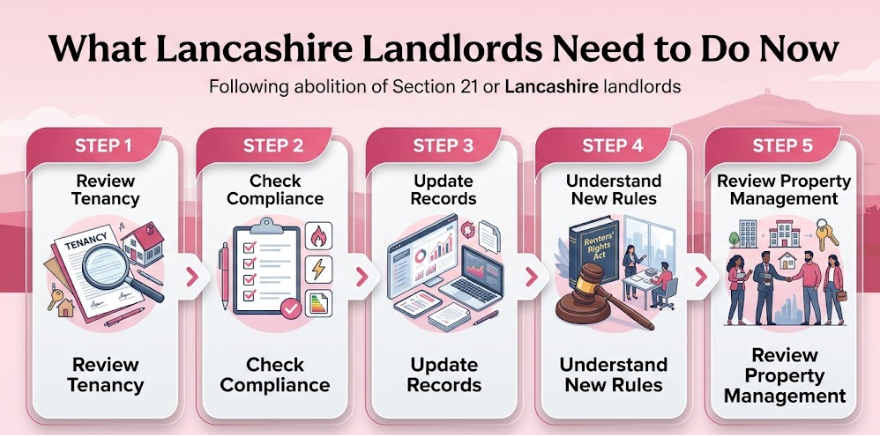
5 Things Lancashire Landlords Should Do Now
- Review your current tenancy agreements. Check whether your paperwork reflects the new periodic tenancy structure, and make sure you understand what a rental contract should now contain.
- Check your legal and safety compliance. Gas safety certificates, electrical checks, EPCs and deposit protection all still apply and matter more than ever as evidence if a possession claim is ever needed.
- Keep accurate records. Rent payments, repair requests, inspection notes and all communication with tenants should be logged and easy to retrieve.
- Understand the new possession rules. Familiarise yourself with the Section 8 grounds that are relevant to your type of letting, and their notice periods.
- Review your property management arrangements. Consider whether you have the time and expertise to manage compliance yourself, or whether working with a local agent makes more sense.
What Should Landlords Check Before Letting a Property?
- Tenancy documentation that reflects the current periodic tenancy rules.
- Deposit protection in an approved scheme, with the required information given to the tenant.
- A valid gas safety certificate, renewed annually.
- An up-to-date electrical safety report (EICR).
- A valid Energy Performance Certificate (EPC).
- The property’s overall condition, including any outstanding repairs.
- Right to Rent checks, where applicable.
- A clear system for communication and record-keeping from day one.
How Can Landlords Reduce the Risk of Problems?
Thorough tenant referencing, a clear and compliant tenancy agreement, and regular, respectful communication all reduce the likelihood of disputes escalating. Prompt repairs and accurate records give both landlord and tenant confidence that issues are being handled properly. Many landlords find that working with an experienced estate agent in Lancashire for referencing, compliance and day-to-day management takes the pressure off, particularly for landlords juggling more than one property.
Why Local Property Knowledge Matters?
Lancashire’s rental market varies significantly from one town to the next. An agent who understands Burnley’s property market, current rental yields across Lancashire, and where Lancashire property investment opportunities are strongest can help you price a let correctly, attract the right tenants, and plan for the future with a realistic view of the Lancashire property market forecast.
Ready to Review Your Rental Property?
If you’re unsure how the new rules affect your tenancy, or you’d simply like a second opinion on your property’s compliance and management, get in touch with Open House Lancashire today. Our local team is happy to talk through your options.
No. Section 21 was abolished on 1 May 2026 under the Renters’ Rights Act 2025, and it can no longer be used for new or existing tenancies.
Landlords must use Section 8 of the Housing Act 1988 and rely on one of the recognised possession grounds, such as rent arrears, antisocial behaviour, or a landlord’s intention to sell or move in.
Any Section 21 notice served before 1 May 2026 could only be used to start court proceedings by 31 July 2026 at the latest. That deadline has now passed, so those notices can no longer be relied on.