
TL;DR
- Developers usually protect the headline price, so negotiate on incentives and extras instead, and get them written into the contract.
- Tell your mortgage lender about every incentive.
- Snagging means listing defects in a new home for the developer to fix. Most new homes have some.
- Report snags early, in writing, within the defects period (generally the first two years).
You are looking at a brand-new home in Lancashire and want two things clear before you commit: which incentives you can ask for, and how snagging protects you once you move in. This guide to buying a new-build home in Lancashire covers incentives, the buying process, snagging and warranties, with tables and a room-by-room checklist.
New developments are going up in towns such as Preston, Blackpool, Blackburn, Burnley, Lancaster, Chorley and Accrington, so the advice applies wherever you are looking. It is general information, not legal or financial advice.
Why Buy a New-Build Home in Lancashire?
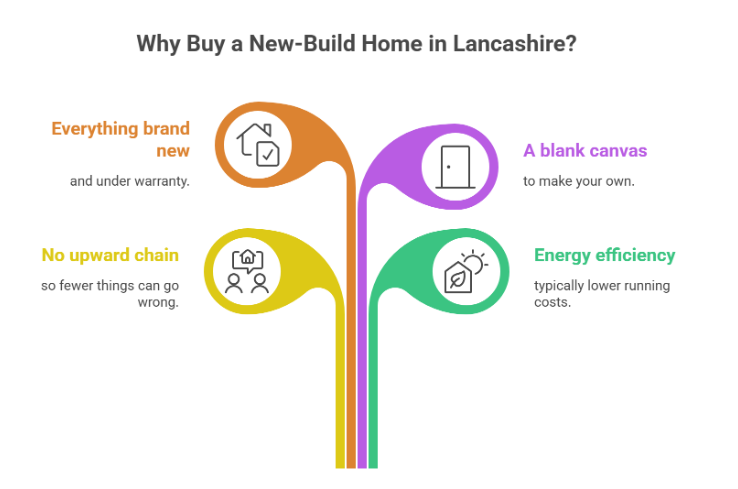
- No upward chain, so fewer things can go wrong.
- Energy efficiency and typically lower running costs.
- Everything brand new and under warranty.
- A blank canvas to make your own.
New-Build vs Older Homes: The Pros and Cons
Factor | New build | Older home |
Price | Usually a premium over similar older homes | Often lower for a similar home nearby |
Running costs | Energy efficient, typically lower | Varies with insulation and heating |
Warranty | Usually a 10-year warranty | Not usually, unless under 10 years old |
Chain | Often none above you | Often part of a chain |
Character | Modern layouts on newer estates | Character features and established areas |
Upkeep | Snagging early on | Maintenance and possible renovation costs |
The New-Build Premium: What to Know Before You Pay It
Brand-new homes usually cost more than similar older homes nearby, and a first owner who sells soon after buying may see little or no growth, or even a dip.
Developers tend to protect the headline price, so negotiation usually happens on incentives and extras instead. Our guide on how to negotiate a house price in Lancashire will help you prepare.
Before You Reserve: Checks and Questions for the Developer
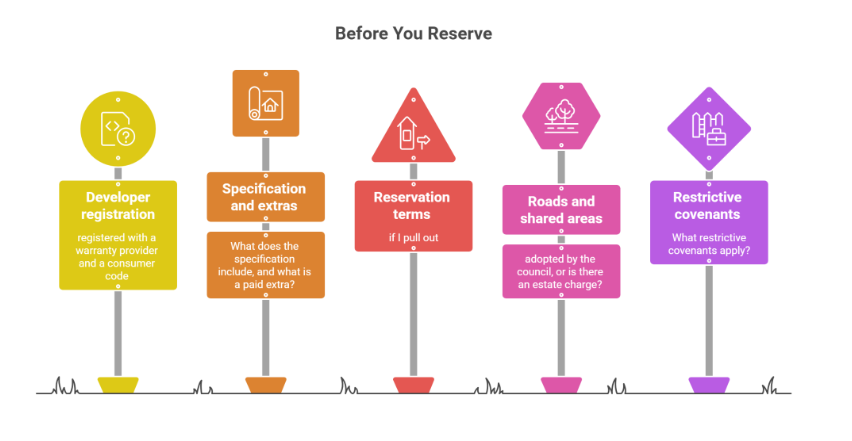
- Is the developer registered with a warranty provider and a consumer code?
- What does the specification include, and what is a paid extra?
- What are the reservation terms if I pull out?
- Will the roads and shared areas be adopted by the council, or is there an estate charge?
- What restrictive covenants apply?
You can use your own solicitor rather than only the developer’s recommended panel.
The Buying Process: Reservation to Completion
- Choose your plot and reserve it.
- Instruct a solicitor and apply for your mortgage.
- Exchange contracts, usually by a deadline in the reservation agreement.
- The home is built and inspected.
- Complete on the notified date and collect your keys.
A fall-through is less likely than in a resale chain. See what to do when a Lancashire house sale falls through, but build delays can still move your completion date.
Buying Off-Plan
Off-plan means buying from plans or a show home: you pay a deposit in exchange, wait while the home is built, then complete. Mortgage offers can expire during a long wait, and the finished home should be checked against the specification you agreed to.
New-Build Incentives Explained
Incentives vary by developer and by plot, so always ask what is available on the plot you want. Common types include:
Incentive | What it means |
Deposit contribution | The developer pays part of your deposit |
Stamp duty or legal fees paid | The developer covers these costs |
Part exchange | The developer buys your current home at an agreed figure, so your chain disappears |
Assisted move | The developer helps market your home through agents for an agreed period |
Free extras | Flooring, appliances, turf or upgrades |
Cashback | A payment on completion |
Incentives must be declared to your mortgage lender, because they can affect the valuation. For any incentive, ask:
- Is it available on this plot?
- Will it be recorded in the contract?
- Has it been disclosed to my lender?
- Does it change if completion dates move?
- What is the deadline to agree to it?
Mortgages and Estate Charges
Mortgage offers have an expiry date, so build delays can mean reapplying or extending. Some lenders treat new builds and flats differently on deposit, so speak to a mortgage broker with new-build experience.
Many new estates, including freehold houses, pay an estate or management charge for roads, green spaces and drainage the council has not adopted. This is sometimes called “fleecehold”. Before reserving, ask what the charge is now, how it has changed and who the management company is.
What Is Snagging?
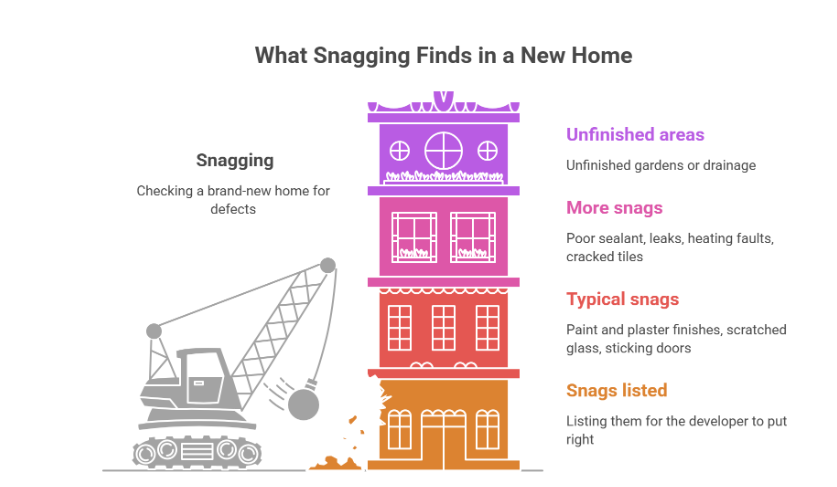
Snagging is checking a brand-new home for defects and unfinished items, from cosmetic marks to things that do not work, and listing them for the developer to put right. Brand new does not mean flawless: most new homes have snags, and that is exactly what the process is for.
Typical snags include paint and plaster finishes, scratched glass, sticking doors, poor sealant, leaks, heating faults, cracked tiles and unfinished gardens or drainage.
When to Book a Snagging Survey
You have two options. A professional pre-completion inspection happens before legal completion, and buyers from developers signed up to the New Homes Quality Code have the right to arrange one at their own cost. Or you can book a snagging survey straight after moving in.
Snags are normally reported during the defects period, generally the first two years. Report early, in writing and with photographs, ideally while the builders are still on site.
Snagging Checklist: What to Check Room by Room
Area | What to check |
Exterior | Brickwork, roof tiles, gutters, paths, fences, garden levels and drainage |
Doors and windows | Open, close and lock properly; seals; scratches on glass |
Walls and ceilings | Paint finish, cracks and marks, checked in daylight |
Kitchen | Units and worktops level and undamaged; appliances working |
Bathrooms | Taps, flush and shower run; sealant and tiling; water drains the right way |
Heating and hot water | Boiler on, radiators heat up, thermostat works |
Electrics | Sockets, switches, lights and extractor fans tested |
Floors | Level, no squeaks or lifted edges; flooring fitted neatly |
How to Report Snags and Understand Your Warranty
Send your snagging list to the developer in writing with photographs, keep copies of everything, agree which items are urgent and chase in writing if dates slip. If a developer will not fix genuine defects, your routes are the warranty provider and, where your developer is signed up to the New Homes Quality Code, the New Homes Ombudsman Service, which generally covers the first two years.
Most new homes come with a 10-year warranty, such as NHBC Buildmark, LABC Warranty or Premier Guarantee:
Period | Typical cover |
Roughly years 1 to 2 | The builder puts right defects |
Years 3 to 10 | Warranty insurance covers major structural problems |
Check which provider covers your home and keep the certificate safe for when you sell.
Thinking of Buying a New-Build Home in Lancashire?
Browse homes and new developments with Open House Lancashire, or speak to our local team on our buying page before you reserve, so incentives and paperwork are clear from the start. Call 01282 786 060.
Snagging is checking a new home for defects and unfinished work, then listing them for the developer to fix.
Either before legal completion, as a pre-completion inspection, or straight after moving in. Do it early so the developer can fix items within the defects period.
Common examples are deposit contributions, stamp duty or legal fees paid, part exchange, free extras and cashback. Availability varies by plot.
It is not compulsory, but most new homes have snags and a professional is likely to spot more than you would.
There is no single deadline, but the defects period is generally the first two years. Ask for clear timescales in writing.
Most new houses are freehold and flats are usually leasehold. Some freehold estates also have estate charges, so check your contract.